


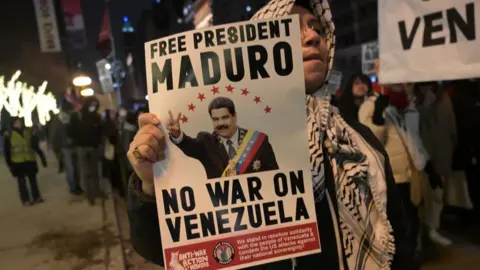
On Monday morning, a shackled, jumpsuit-clad Nicolás Maduro disembarked from a armed forces helicopter in New York City, accompanied by armed federal agents.
The Caracas chief had spent the night in a infamous federal jail in Brooklyn, before authorities transported him to a Manhattan court to answer to indictments.
The chief law enforcement officer has stated Maduro was delivered to the US to "face justice".
But international law experts doubt the legality of the government's maneuver, and maintain the US may have violated international statutes concerning the use of force. Domestically, however, the US's actions fall into a legal grey area that may nevertheless lead to Maduro standing trial, irrespective of the circumstances that led to his presence.
The US insists its actions were legally justified. The administration has charged Maduro of "drug-funded terrorism" and facilitating the transport of "thousands of tonnes" of narcotics to the US.
"The entire team acted with utmost professionalism, with resolve, and in full compliance with US law and official guidelines," the top legal official said in a release.
Maduro has consistently rejected US allegations that he manages an illegal drug operation, and in court in New York on Monday he stated his plea of not guilty.
Global Legal and Action Concerns
While the indictments are focused on drugs, the US pursuit of Maduro is the culmination of years of condemnation of his governance of Venezuela from the wider international community.
In 2020, UN fact-finders said Maduro's government had carried out "serious breaches" amounting to international crimes - and that the president and other high-ranking members were involved. The US and some of its partners have also alleged Maduro of electoral fraud, and withheld recognition of him as the legal head of state.
Maduro's alleged links to narco-trafficking organizations are the crux of this indictment, yet the US tactics in putting him before a US judge to answer these charges are also under scrutiny.
Conducting a armed incursion in Venezuela and whisking Maduro out of the country secretly was "entirely unlawful under global statutes," said a professor at a law school.
Scholars highlighted a host of issues stemming from the US action.
The UN Charter forbids members from threatening or using force against other states. It permits "self-defence if an armed attack occurs" but that risk must be immediate, experts said. The other allowance occurs when the UN Security Council sanctions such an action, which the US lacked before it acted in Venezuela.
Global jurisprudence would regard the illicit narcotics allegations the US accuses against Maduro to be a criminal justice issue, experts say, not a violent attack that might permit one country to take armed action against another.
In comments to the press, the administration has characterised the mission as, in the words of the Secretary of State, "basically a law enforcement function", rather than an declaration of war.
Historical Parallels and US Jurisdictional Questions
Maduro has been under indictment on narco-terrorism counts in the US since 2020; the justice department has now issued a revised - or revised - charging document against the Venezuelan leader. The administration contends it is now executing it.
"The operation was executed to aid an ongoing criminal prosecution linked to massive drug smuggling and connected charges that have fuelled violence, destabilised the region, and exacerbated the narcotics problem claiming American lives," the Attorney General said in her remarks.
But since the apprehension, several legal experts have said the US broke global norms by extracting Maduro out of Venezuela on its own.
"One nation cannot invade another sovereign nation and detain individuals," said an professor of international criminal law. "If the US wants to apprehend someone in another country, the established method to do that is a legal process."
Regardless of whether an person faces indictment in America, "The United States has no authority to travel globally enforcing an arrest warrant in the lands of other independent nations," she said.
Maduro's legal team in the Manhattan courtroom on Monday said they would challenge the propriety of the US mission which brought him from Caracas to New York.
There's also a long-running legal debate about whether presidents must follow the UN Charter. The US Constitution regards accords the country ratifies to be the "binding legal authority".
But there's a well-known case of a previous government claiming it did not have to follow the charter.
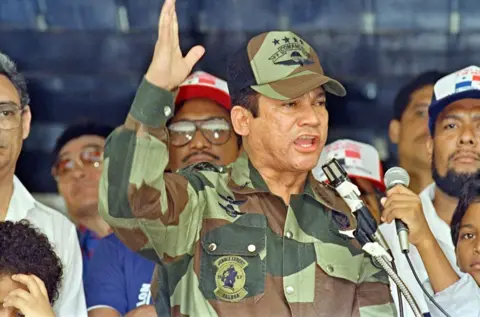
In 1989, the Bush White House captured Panama's strongman Manuel Noriega and took him to the US to answer illicit narcotics accusations.
An internal legal opinion from the time stated that the president had the legal authority to order the FBI to detain individuals who violated US law, "even if those actions contravene established global norms" - including the UN Charter.
The writer of that opinion, William Barr, became the US top prosecutor and filed the original 2020 charges against Maduro.
However, the opinion's rationale later came under scrutiny from legal scholars. US the judiciary have not made a definitive judgment on the question.
US War Powers and Jurisdiction
In the US, the matter of whether this action violated any US statutes is multifaceted.
The US Constitution grants Congress the prerogative to authorize military force, but puts the president in charge of the military.
A Nixon-era law called the War Powers Resolution places restrictions on the president's power to use military force. It compels the president to consult Congress before sending US troops overseas "whenever possible," and notify Congress within 48 hours of initiating an operation.
The administration did not give Congress a advance notice before the mission in Venezuela "to ensure its success," a senior figure said.
However, several {presidents|commanders


