

How does it feel to engage in talks with Russian representatives concerning the conflict in Ukraine?
This question has generated considerable curiosity following several recent rounds of ceasefire talks, which have so far seemed to produce minimal progress half a decade since the full-scale invasion.
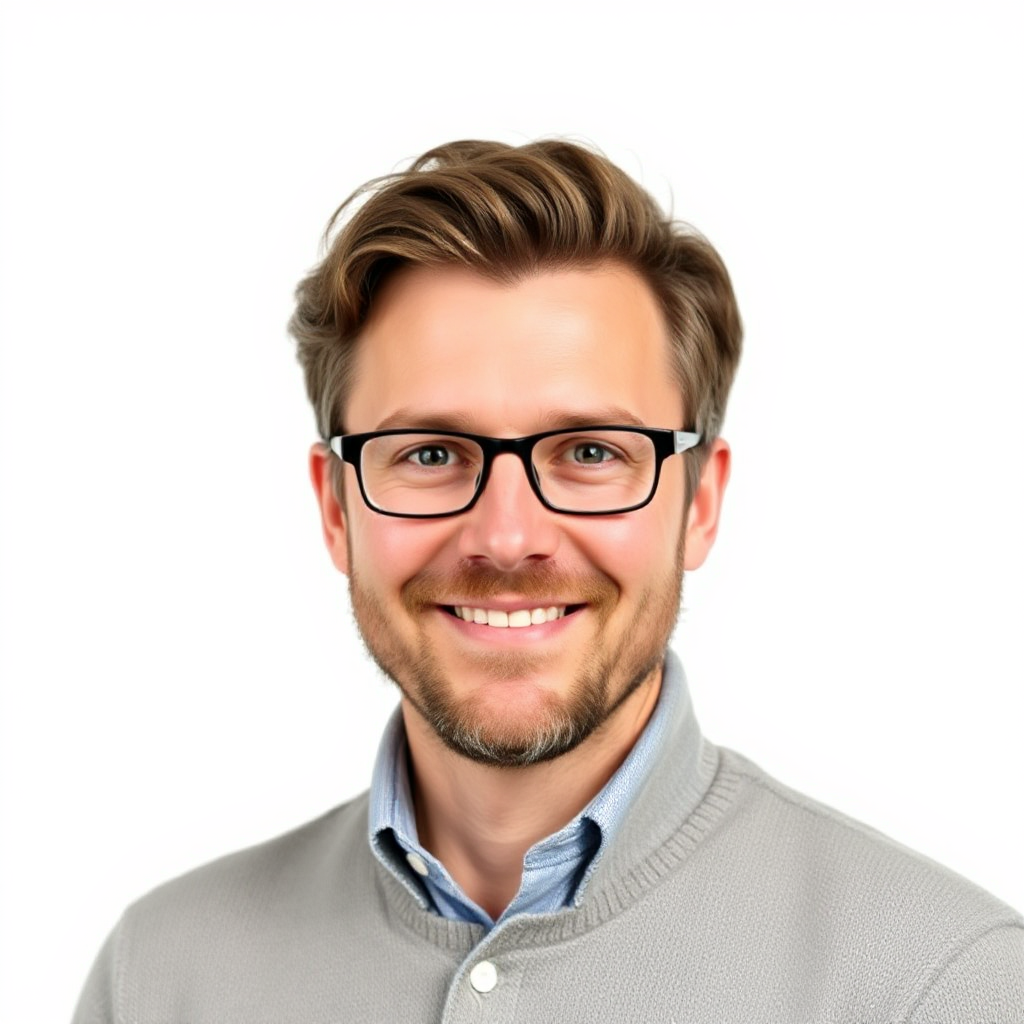
Another phase of American-facilitated negotiations is expected to occur in the Swiss city in the coming days. In preparation, an important member of Ukrainian President Zelensky's delegation, the diplomat, who has been involved in the latest military-to-military discussions, has provided his perspective.
According to Kyslytsya, these interactions are business-like and mostly devoid of the sort of ideological and historical posturing seen elsewhere by Russian leadership.
"The military have a better understanding of the realities in the combat zone," he remarked during a meeting on Monday morning.
"It's another thing whether they [the Russians] are capable, or not, of relaying information accurately…without altering or changing the facts," he continued.
It is far from an easy task to attempt to halt a war. The nature of the front line in eastern Ukraine - where thousands of unmanned aerial vehicles patrol and kill over a vast so-called "contested area" separating the two sides, while two hundred thousand local civilians still reside in the "heavily fortified" urban areas of the eastern region - makes the technical business of separation extremely complicated.
"It is essential to establish a precise framework of rules and procedures," the diplomat explained, "along with a method to confirm and oversee."
The Involvement of External Mediators
A great deal of these preparations, he noted, is finished, partly due to the direct involvement of US officials, such as General Alexus Grynkewich and a high-ranking Army official.
Clearly against Ukraine's benefit to criticise representatives of the American government, but when Kyslytsya praises the US delegation for its work, he sounds genuine.
"We have to credit the US side for their commitment and their perseverance," he says, "because they attend the sessions non-stop. They not only watch…they ask questions and they listen to our responses."
The negotiator was equally complimentary about the roles of Donald Trump's son-in-law, Jared Kushner, whom he referred to as "not a novice", and wealthy mediator the special representative, whom he described as "far more astute person than the simplified portrayal often presented in the press".
The United States, he asserted, will play a key role in overseeing any future truce, with resources including orbital and other forms of advanced monitoring.
"It is necessary to have someone who will serve as an arbitrator, for the reason that if there is a violation there should be a neutral actor that is reliable [and] authoritative."

Previous and Current Monitoring Realities
During an eight-year period prior to Russia's major invasion in 2022, this monitoring role was handled by the Organisation for Security and Cooperation in Europe - a group whose limited resources and absence of punitive powers made it mostly unable of averting an escalation.
"It was no small feat [for them] simply to operate two UAVs flying over the area," he said. "It resembles the Flintstones period in contrast with what we have now."
In comparison, recent reports indicate that as many as 12,000 unmanned aircraft are operating over the single city of a frontline city at any one time.
A Personal Perspective on Facing the Adversary
When asked how he managed to negotiate directly from emissaries from a head of state in the Kremlin who has been willing to expend over a million-plus of his country's soldiers to conquer its neighbor, the diplomat, with extensive UN experience, offered his response.
He explained that he'd had years of practice.
"I saw far more difficult situations. I spent five years in New York, three of them before the full-scale invasion. I would sit in the room with the enemy on a regular basis."
A particular night is etched in his memory: 23 February 2022.
During an urgent Security Council meeting, convened to discuss the looming threat in the country, the ambassador got word that his country was under attack.
At the same time, far away to the east in Kyiv, initial far-off detonations signaled as Russia's all-out assault on the nation began.
During moments of intense drama, Kyslytsya tried to get his Russian counterpart, Vassily Nebenzia, to call his boss, the Russian foreign minister, to seek assurances that Russian troops would not cross the border.
"I have stated all that I am aware of today," Nebenzia replied, as recalled by his Ukrainian colleague. "I will not disturb Minister Lavrov at this hour."
Everyone's lives were transformed at that moment. Kyslytsya remained at the United Nations for another three years before going back to Kyiv.
The Road Ahead
Should the delegations meet again in Geneva this week, he will participate, still thrashing out the contours and logistics of a halt in fighting but anticipating all the while for the most important element of the puzzle to fall into place.
"The war could be stopped by simply one call of an individual to his military chief of staff," he said.
"However, the Kremlin dictator [Vladimir Putin] is not up to ending the conflict for the time being."


